

Introduction
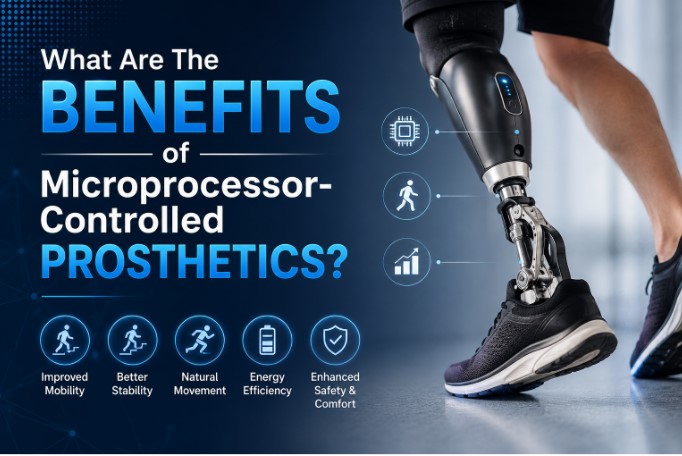
Adjusting to life after an amputation is incredibly tough and trying to sort through endless gear options can make your head spin. Traditional artificial limbs require tons of physical energy and non-stop focus, leaving you totally drained by dinner time. Built-in computer chips change all that by doing the heavy adjustments for you, letting you look up and simply enjoy your walk.
Key Takeaways
- Onboard microcomputers read your walking pace and changes in the dirt or pavement to adjust joint resistance instantly.
- Smart stumble-recovery sensors detect a sudden trip or slip and automatically lock the joint to prevent a bad fall.
- These computerized systems take a massive physical burden off your muscles, leaving you with way more daily energy.
- Fluid, natural bending protects your sound leg and lower back from the painful joint wear caused by awkward walking habits.
13 Benefits of Microprocessor-Controlled Devices
Switching to a computerized prosthetic system completely alters how you move through your home and neighborhood. Instead of constantly keeping your eyes locked onto the pavement to watch out for tiny cracks, twigs or pebbles, you can actually hold your head high and enjoy talking with the people walking next to you. Let’s look at the thirteen key advantages that these modern devices bring to your day-to-day routine.
1. Unmatched Stumble Recovery and Daily Safety
The absolute biggest worry for most amputees is taking a bad spill and getting hurt. Older mechanical knees can easily buckle out from under you if you catch your toe on a rug or trip on an uneven sidewalk. Because they cannot react on their own, a simple misstep often means a direct fall to the ground. Computerized joints solve this because they are built around active safety algorithms. If the sensor spots a sudden drop or a weird hitch in your stride, it instantly stiffens up to support your weight, catching you before you even realize you tripped. This rapid safety net lets you walk through crowded spaces or down bumpy paths without that overwhelming knot of anxiety in your stomach.
2. Smooth, Natural Movement on All Kinds of Terrain
Walking with a traditional artificial limb usually forces you into a rigid, robotic pace because the mechanical parts can’t react on their own. If you want to speed up to cross a street or slow down to stay next to a friend, it can’t match you. This mismatch forces you to walk with a jerky, uneven cadence that makes it obvious you are using an artificial limb. Modern prosthetic services utilize smart joints that watch your body’s speed and weight shifts to adapt on the fly. Whether you are walking on shifting gravel, stepping down a flight of stairs or traversing a grassy slope at a local park, the knee flows naturally to match human movement.
3. Massive Reduction in Daily Energy Expenditure
Because older mechanical prosthetics force you to rely entirely on your residual limb strength to physically fling the leg forward, you burn through calories at an alarming rate. It feels like sprinting just to walk down the hallway. Microprocessor-controlled limbs use smart hydraulics and pneumatics to smooth out that transition, meaning your muscles do not have to work nearly as hard. You will find yourself finishing a long grocery trip with plenty of energy left over for the rest of your afternoon.
4. Reduced Pain and Stress on the Rest of Your Body
When an artificial limb doesn’t bend naturally, your body forces you to make up for it with awkward habits. You might find yourself swinging your leg out wide in a big circle or leaning hard onto your good side just to get your foot to clear the floor. While these tricks help you move forward, they take a massive toll on your skeletal system. Over time, that constant twisting and uneven loading tears up your lower back, your hips and your remaining good knee, often leading to painful arthritis and long-term fatigue. Getting fitted at a specialized prosthetic clinic ensures your joint bends at the exact millisecond your body expects, saving you from years of chronic pain.
5. Seamless Walking on Ramps and Inclines
Stepping down a steep ramp with a mechanical leg is terrifying because you cannot control the speed of the bend, which often forces you to walk sideways or take awkward tiny steps. Computerized joints provide progressive resistance as you move down a slope. This means the leg yields gently under your weight, mirroring how a biological knee functions and lets you stride smoothly down hills without feeling like the leg is going to give way.
6. Enhanced Balance While Standing Completely Still
Many people do not realize that standing in one place can actually be harder than walking when you use a prosthesis, as you have to constantly engage your core to keep a mechanical joint locked. Microprocessor devices feature an intuitive “stance function” that recognizes when you have stopped moving and automatically locks the joint in place to support you. This lets you stand comfortably in line or chat at a backyard barbecue without leaning heavily on canes or countertops.
7. Speed-Adaptive Cadence Control
Whether you are rushing to catch a crossing light or slowly wandering through an art museum, your stride changes constantly. Traditional limbs have one fixed setting but a microprocessor reads your momentum hundreds of times per second and automatically matches your tempo. If you take a fast, sudden step, the limb opens up instantly; if you slow down, it dampens the swing so the foot lands exactly where it should without jarring your body.
8. Dramatic Drop in Cognitive Exhaustion
When you use a basic mechanical leg, you have to mentally plan out every single piece of data regarding the ground in front of you. It takes immense concentration just to cross a room. Because the smart sensors handle the micro-adjustments automatically, it frees up your mind. You can finally look up from the floor, enjoy a conversation, look at the scenery and let your subconscious mind handle the actual mechanics of walking.
9. Step-Over-Step Stair Navigation
Descending a flight of stairs on a mechanical limb usually requires stepping down with your sound leg first, then bringing the prosthetic down to match it on the exact same step. It is slow and frustrating. High-tech microprocessor knees allow you to walk down stairs step-over-step in a completely normal, alternating fashion because the smart hydraulics support your body weight safely as the leg bends beneath you.
10. Protection for Your Healthy, Sound Limb
Because amputees naturally distrust a basic mechanical limb, they subconsciously shift up to 80% of their body weight onto their remaining natural leg. Over the course of a few years, this extreme overloading completely destroys the cartilage in the good knee and hip. A computerized prosthesis gives you the stability you need to actually trust the device, allowing you to distribute your weight evenly and save your natural joints from early failure.
11. True Customization for Your Specific Lifestyle
No two paths to recovery look exactly the same and your gear should reflect that. Microprocessor prosthetics feature programmable modes that your clinician can fine-tune through an app or computer software. Whether you need a special setting for riding a bicycle, a secure lock for golfing or specific activity modes for physical rehab, the device adapts beautifully to support your exact hobbies and daily work requirements.
12. Greater Independence for Lower Activity Levels
There is a common misconception that high-tech computer limbs are only meant for young, fast athletes. In reality, less active individuals and older adults get an enormous amount of value from this tech. The automatic stability and fall prevention features allow older individuals to safely navigate their own homes, fetch their mail and move around the community without needing a constant caregiver or relying heavily on a wheelchair.
13. Increased Overall Quality of Life and Confidence
At the end of the day, the biggest benefit is the profound psychological shift. When you stop viewing every curb, rug and gravel driveway as a dangerous obstacle course, your world opens back up. The sheer confidence of knowing your leg will catch you if you slip allows you to say yes to family outings, travel and social events that you might have previously skipped out of fear. Getting fitted for a smart system at a custom prosthetic Oklahoma city facility helps safeguard your skeletal system, keeping you moving comfortably for years.
Conclusion
A high-tech limb removes the constant fear of falling and cuts down on the daily exhaustion holding you back from the things you love. Exploring your options at a dedicated center for your care can completely change your future, giving you back your confidence, comfort and independence.